
How to Conduct yourself when the Room is Tense
We’ve all been there. You walk into the school conference room with a notebook full of concerns, only to find a team that seems to have already written the story of your child’s year. Instead of a collaborative brainstorm, the meeting feels like a defensive play.
When a school team becomes difficult, it’s easy to feel gaslit, ignored, or simply outmatched. But a "stuck" team doesn't have to mean a stuck student. Here is how to handle the heat and why having a professional advocate in your corner changes the entire dynamic.
- The "Pause" Technique: If a team member is being dismissive or speaking over you, wait three seconds after they finish before you speak. This lowers the "temperature" of the room and helps you regulate minimizing the reaction out of raw emotion.
- Ask, Don't Assert: Instead of saying, "You aren't helping my child," try asking, "What specific data are we using to determine that this level of support is sufficient?" It forces the team to move from opinions to evidence.
- The Power of the "Parking Lot": If the team tries to shut down a topic by saying "we don't have time," ask them to "park" that topic in the official meeting notes to be addressed in a follow-up meeting within a specific timeframe.
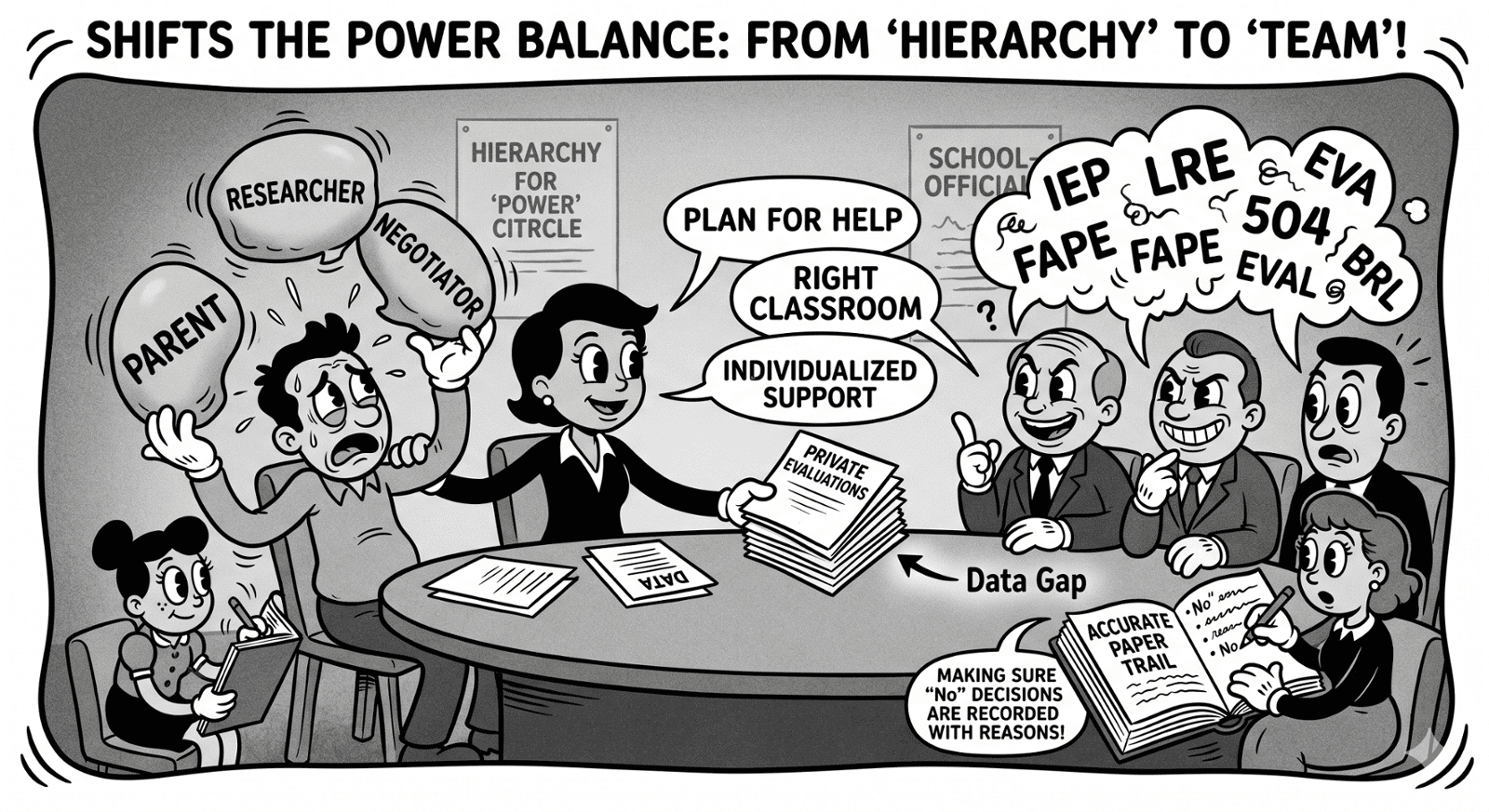
The Turning Point: How a Special Education Advocate Changes the Game
You shouldn't have to be the parent, the researcher, and the negotiator all at once. Bringing an advocate to the table shifts the power balance from a "hierarchy" to a true "team."
Here is how we help:
Don’t Go Into the Next Meeting Alone
A difficult school team isn't always a "bad" team—often, they are simply stuck in old patterns, limited by resources, or missing the full picture of your child’s potential. Our role is to provide the creative solutions and the professional momentum needed to shift the conversation back to where it belongs: your child -- their vision, their progress, their ability to succeed.
You are the expert on your child; let us be the expert on the process.